

Is Online or Face-to-Face Tutoring Better for Your Child?
Reviewed by: Christopher Chen (Founder)
Last updated: 1st October 2026
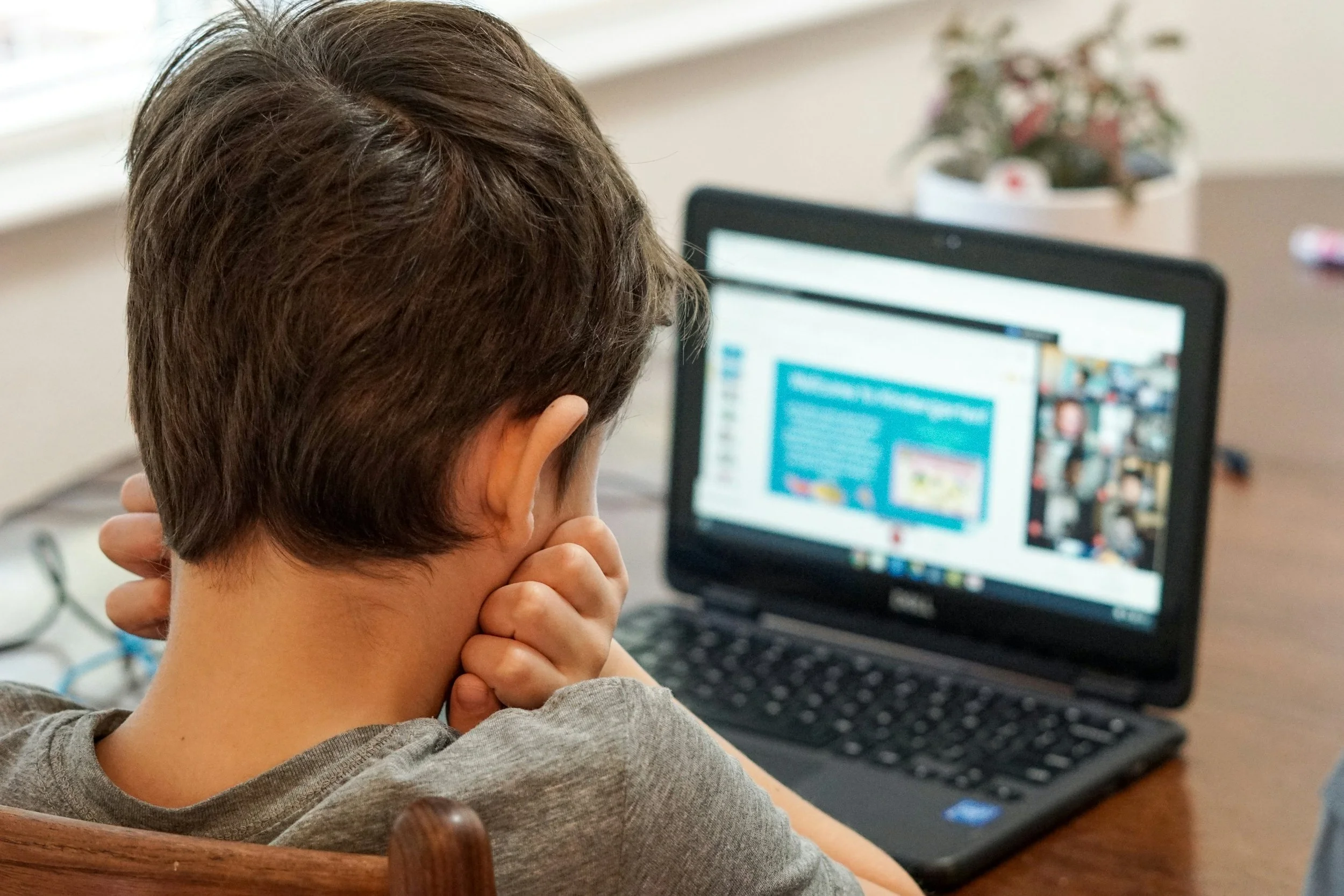
Parents often wonder whether online or face-to-face tutoring is better for their child. Every child learns differently, which means the most suitable approach will vary from student to student. Online tutoring can benefit students who value the convenience of learning from home and can remain focused in a digital environment. Face-to-face tutoring may suit students who enjoy a physical classroom and benefit from the routine of attending lessons in person.
Ultimately, the best choice depends on your child, how the tutoring centre delivers each format and how well your child engages in that environment.
What Is Online Tutoring and What Is Face-to-Face Tutoring?
Online tutoring is delivered remotely through a live online platform. Students interact with their tutor in real time through a computer or other device, with teaching often supported by screen sharing, digital whiteboards, online worksheets and other interactive tools.
It is important to distinguish live online tutoring from self-paced online programs. Self-paced programs usually involve prerecorded content or independent activities without a tutor teaching in real time. For the purposes of this guide, “online tutoring” refers to live, real-time teaching with a tutor.
Face-to-face tutoring, by comparison, involves students and tutors attending the same physical location. Students can interact directly with their tutor and classmates, while lessons may use physical worksheets, books, whiteboards, computers and other classroom resources.
The content taught in online and face-to-face classes may be very similar, but the way students interact with the tutor, resources and learning environment can differ between the two formats.
How Do Online and Face-to-Face Classes Compare?
Online and face-to-face tutoring can be compared across several areas, including interaction with the tutor, concentration and engagement, convenience and travel, opportunities for feedback and preparation for computer-based tests.
Interaction with the Tutor and Other Students
Face-to-face tutoring allows students to interact with tutors and classmates in person. Tutors may find it easier to observe body language, hesitation and other signs that a student is confused or disengaged when they are physically present in the same room.
Students may also have more opportunities for informal interaction with their classmates before, during or after lessons. For children who enjoy social interaction, the physical classroom environment may feel more natural.
Online tutors can still monitor students, ask questions, view work and provide direct feedback. However, students learning online generally need to be comfortable remaining focused and participating through a screen.
The most important question is not simply where the tutor is located, but: How effectively does the tutor interact with and monitor my child during the lesson?
Concentration and Engagement
Face-to-face tutoring provides a separate physical space dedicated to learning, which may benefit students who are easily distracted by computers, phones or other activities at home.
Online tutoring, however, allows children to learn in a familiar environment. Some students feel more relaxed and comfortable learning from home, particularly if they find unfamiliar classrooms distracting or intimidating.
Neither environment will suit every child. Parents should consider where their child is most likely to remain focused, participate and complete their work effectively.
Convenience and Travel
Face-to-face tutoring requires families to travel to and from a tutoring centre, which can become inconvenient if the centre is far from home or the travel has to fit around other commitments.
Online tutoring removes travel time entirely, which can make scheduling easier and provide access to courses that may not otherwise be available nearby.
However, convenience should not be the only consideration. Is the convenience of a particular format worthwhile if my child is less engaged or focused while learning in that environment?
Asking Questions and Receiving Feedback
Both online and face-to-face tutoring should give students opportunities to ask questions and receive personalised feedback.
The size of the class can influence how much individual interaction a student receives. If you are also considering whether a small or large tutoring class would better suit your child, you can read our guide to small-group versus large-group tutoring.
Some students find speaking directly with their tutor easier in person, while others may feel more comfortable asking questions through an online chat or speaking from the familiarity of their own home.
Whichever format you choose, ask the tutoring centre: How does the tutor identify when my child needs help, particularly if they do not ask for it themselves?
Preparing for Computer-Based Tests
Another consideration is what your child is ultimately preparing for.
For example, the NSW OC and Selective High School Placement Tests are computer based. Online tutoring may naturally give students more experience reading questions, navigating content and completing activities digitally.
However, this does not mean online tutoring is automatically better for computer-based assessments. Face-to-face tutoring centres can also incorporate computers and digital testing into their programs.
At Alpha One, our OC and Selective trial test programs use computers to help students become familiar with the format of the real tests. When comparing tutoring centres, it is worth asking: How does your program prepare students for the computer-based test environment?
Which Format Is Better for Your Child?
Research suggests that the delivery format alone does not necessarily determine how effectively a student learns. In a study published in the Australasian Journal of Educational Technology, Ng and Cheung (2007) compared face-to-face tutor-led discussion with in-class online discussion among preservice teachers and found no significant difference in their later recall of concepts. While the study involved adult learners rather than school-aged children, it supports the broader idea that both formats can support learning when they are delivered effectively.
For parents, this means the focus should be on how well the format suits the individual child, rather than assuming that online or face-to-face tutoring is inherently better.
Online tutoring may suit your child if they:
are comfortable learning through a computer
can focus reasonably well at home
work independently
are comfortable asking questions online
benefit from avoiding travel
have reliable internet and an appropriate device
need access to a class that is not conveniently available nearby.
Face-to-face tutoring may suit your child if they:
benefit from direct interaction with their tutor
find it easier to concentrate outside the home
need more monitoring to stay on task
rely on tutors noticing when they are confused
enjoy interacting with classmates in person
benefit from a regular physical learning routine.
Some students may learn effectively in either environment. The format is only one part of choosing a tutoring centre. Tutor quality, class size, curriculum, learning resources and the additional support available to your child should also be considered.
Frequently Asked Questions
-
Think about how your child normally behaves when learning at home and in a classroom.
Consider:
Does my child concentrate well at home?
How independently do they work?
Do they confidently ask questions when they are confused?
How much monitoring do they need from a tutor?
Are they comfortable using technology for extended periods?
Would travelling to tutoring significantly affect our family’s schedule?
The goal is to identify the environment in which your child is most likely to remain engaged, ask questions and complete their work effectively.
-
Parents should understand how the online class actually operates, rather than assuming all online tutoring is delivered in the same way.
Consider asking:
Are classes taught live?
How does the tutor check whether students understand?
Can students ask questions individually?
How is work shared and marked?
What happens if there are technical problems?
How many students are in each class?
-
When comparing face-to-face centres, look beyond location and convenience. Consider how much support and interaction your child will actually receive during and outside the lesson.
Ask:
What is the maximum class size?
How does the tutor provide individual feedback?
What support is available outside class?
Can parents speak directly with tutors?
Can my child trial the class before enrolling?
-
Not necessarily. Online tutoring can help students become comfortable working digitally, but strong teaching and relevant preparation can be provided in either format.
Face-to-face tutoring centres can also incorporate computer-based trial tests and digital resources. The more important question is whether the program gives students enough realistic computer-based practice before the actual test.
-
Where possible, yes. A trial class can help you assess your child’s concentration, interaction with the tutor and overall comfort with the learning environment before making a longer commitment.
-
Alpha One offers both online and face-to-face tutoring options.
Our face-to-face classes are available at our five locations: Bella Vista, North Parramatta, Epping, Tallawong and Burwood. We also offer online classes for families who prefer remote learning or cannot conveniently attend one of our physical locations.
If you are unsure which format will work best for your child, a free trial can give them an opportunity to experience the Alpha One learning environment before you decide whether to enrol.
What Should Parents Do Next?
Start by considering how your child learns and which environment is most likely to help them remain engaged. Think about their independence, concentration, comfort with technology, need for tutor interaction and the practical impact of travelling to classes.
Remember that a strong face-to-face program is not automatically better than a strong online program, and the reverse is also true. If your child is comfortable learning in either environment, other factors such as tutor quality, class size, curriculum and additional learning support may become more important.
Where possible, allow your child to experience the format before making a longer commitment. Seeing how they respond to the tutor and learning environment can often provide more useful information than comparing course descriptions alone.
Sources
Ng, C.S.L. & Cheung, W.S. 2007, ‘Comparing face to face, tutor led discussion and online discussion in the classroom’, Australasian Journal of Educational Technology, vol. 23, no. 4, pp. 455–469, doi:10.14742/ajet.1246.